🚀 Product Description
Characteristics of Pneumatic Conveying
- Simple equipment, compact structure, small footprint, and flexible pipeline configuration for optimized factory production.
- Completely closed system with minimal dust, meeting strict environmental requirements.
- Fewer moving parts, easy maintenance, and centralized program automation.
- High efficiency for bulk material conveying, reducing packaging and handling costs.
- Ensures quality by preventing moisture, dirt, and sundry material contamination.
- Supports simultaneous processes: mixing, crushing, grading, drying, cooling, and chemical reactions.
- Enables centralized or scattered material distribution over long distances.
- Compatible with inert gas for chemically unstable materials.
Classification by Density and Airflow
1. By Material Density:
- Dilute-phase conveying: Low and stable pressure, low material-gas ratio.
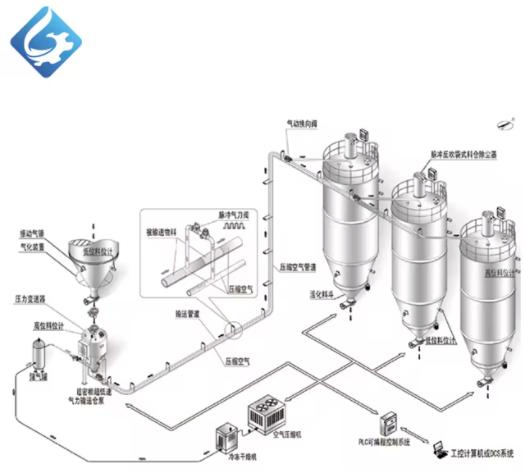
- Dense-phase conveying: Higher pressure, low gas velocity, high material-gas ratio.
2. By Airflow Mode:
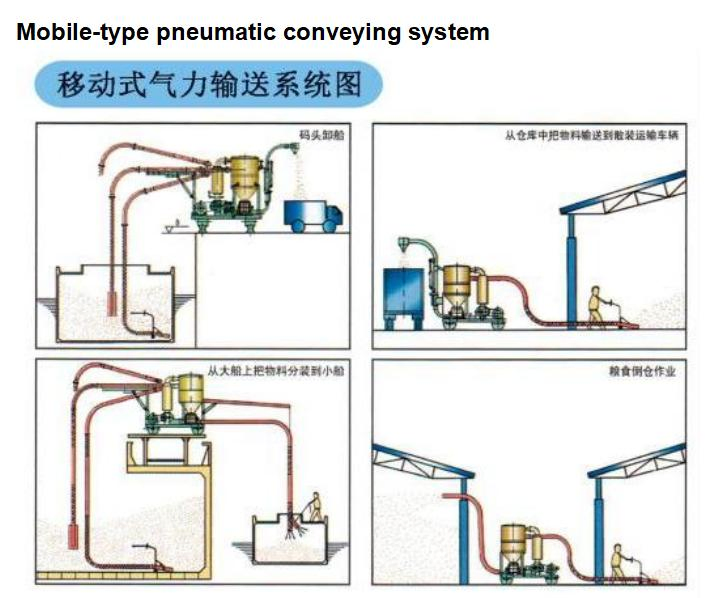
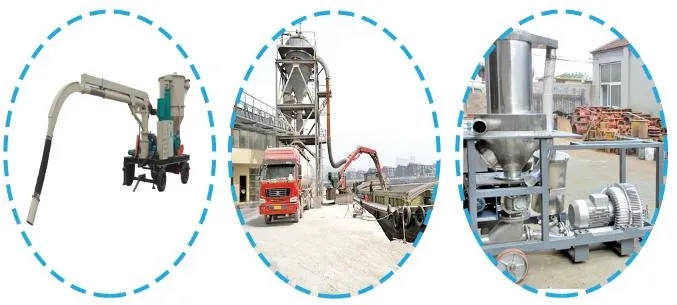
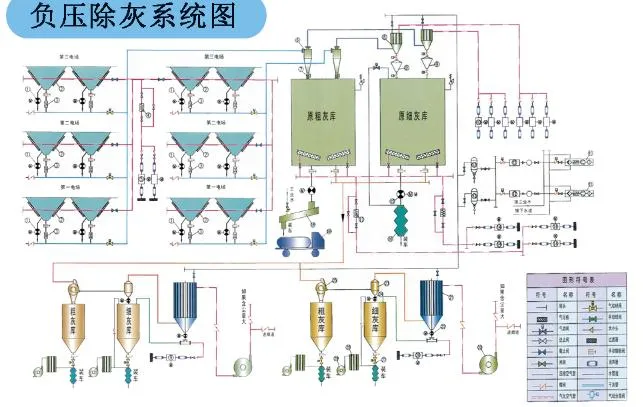
- Suction-feeding (Negative Pressure)
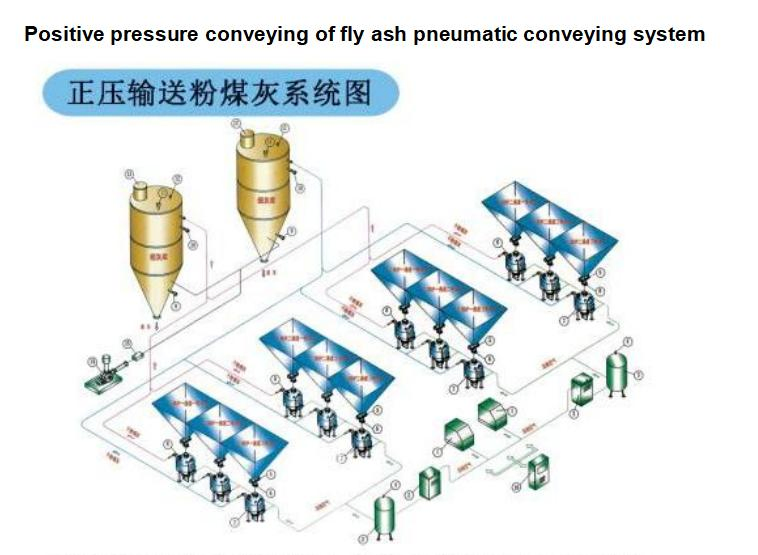
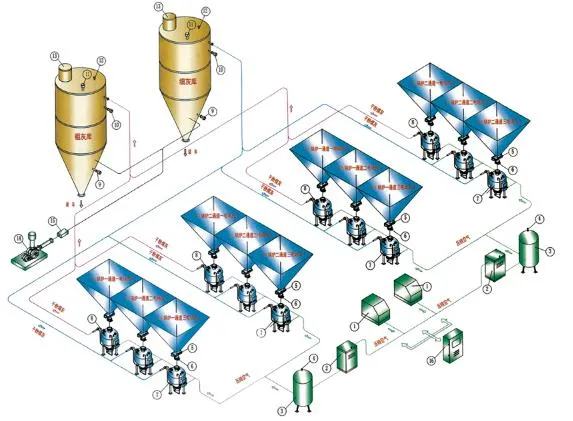
- Pressure-feeding (Positive Pressure)
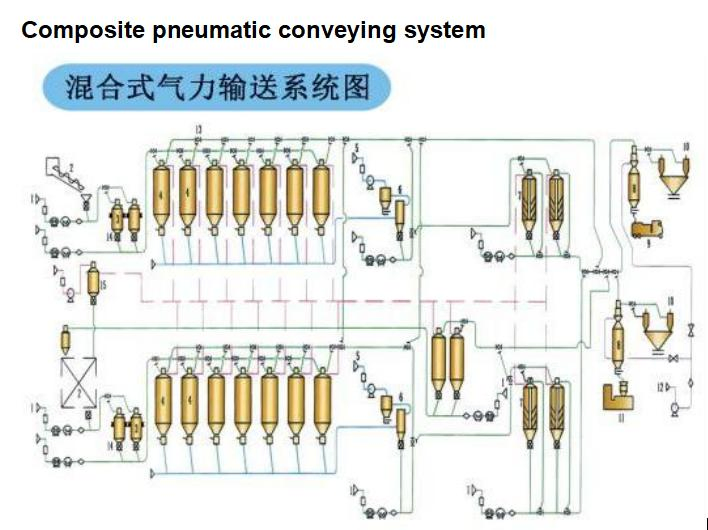
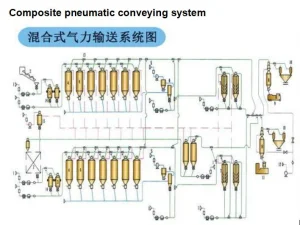
- Composite (Combined Suction and Pressure)
| Classification Basis |
Type / Parameters |
| Mixing ratio of material and gas | Dilute phase <10, Medium phase 10~25, Dense phase >25 |
| Flow mode | Suction (negative pressure), pressure (positive pressure) |
| Gas source pressure (Vacuum) | High vacuum -0.05~-0.02; Low vacuum -0.02~0.02 |
| Gas source pressure (Positive) | Low pressure 0~0.05; High pressure 0.1~0.7 |
| Conveyor Principle | Dynamic pressure (velocity energy), static pressure (pressure energy) |
| Flow state | Suspension flow, group flow, bolus flow |
Technical Systems Comparison
| System Type |
Volume (t/h) |
Pressure (kPa) |
Pipe Dia (mm) |
Height (m) |
Distance (m) |
| Dense-phase High-pressure |
0.1~100 |
100~600 |
40~200 |
50 |
1000 |
| Dilute-phase Vacuum Suction |
0.1~150 |
-29.4~-80 |
50~300 |
5~30 |
10~150 |
🌍 Typical Application Fields
- Petrochemicals: Polymer granules and powder materials processing.
- Plastics: Raw material storage, feeding, weighing, and proportioning.
- Power & Metallurgy: Conveying coal ash, desulfurization ash, and dust.
- Food & Pharma: Raw material transportation, crushing, and drying.
- Grain: Storage and transfer processes.
Materials Handled
Hazardous, abrasive, wet/viscous, brittle, non-free-flowing, and large particle size materials.
❓ Frequently Asked Questions
1. What are the typical applications of the pneumatic conveying system?
It is widely used in petrochemical polymers, plastic processing, power plant fly ash removal, pharmaceutical raw material mixing, and grain storage transfer processes.
2. What technical data is required to design a system?
Key parameters include bulk specific gravity (kg/m3), material strength/size (um-mm), temperature, moisture content, conveying capacity, and transport distances (horizontal/vertical).
3. What equipment is included in a complete system?
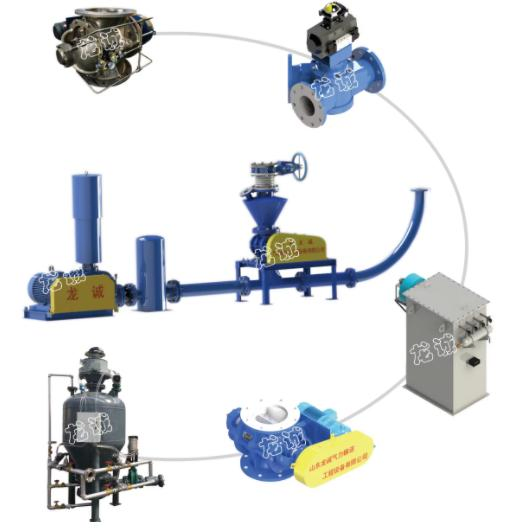
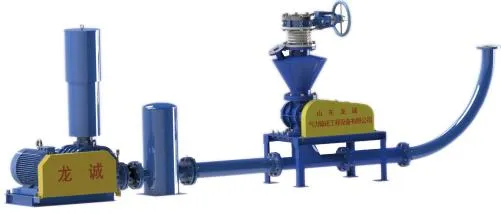
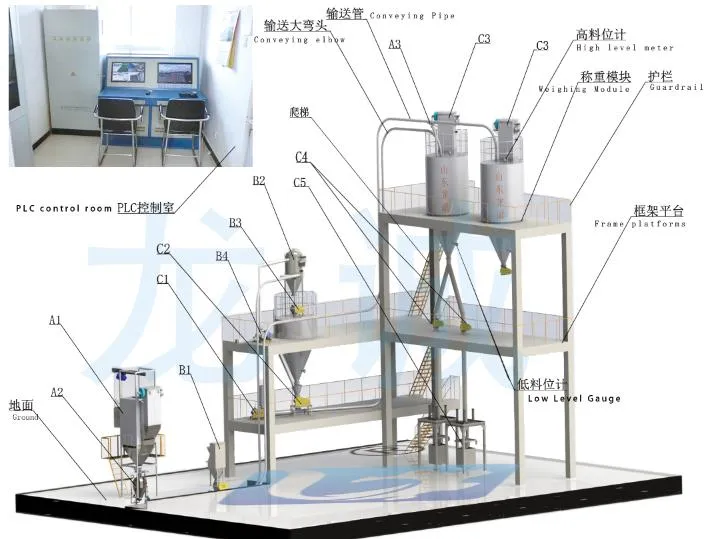
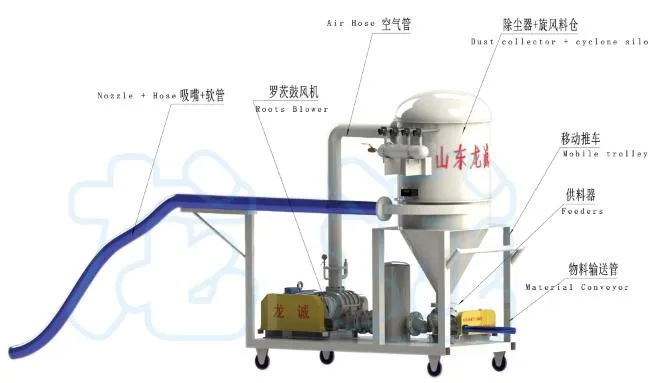
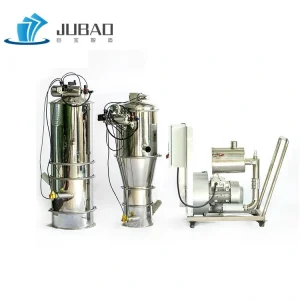
Core components include rotary feeders (star valves), wear-resistant feeders, shunt valves, Roots blowers or vacuum pumps, bag dust collectors, and PLC electrical control cabinets.
4. What is the difference between Dilute-phase and Dense-phase conveying?
Dilute-phase uses lower pressure and higher air speeds for suspension flow, while Dense-phase uses higher pressure and lower gas velocity, allowing for a higher material-gas ratio and less material breakage.
5. How does a Suction Pneumatic Conveying system work?
The system creates negative pressure, sucking air and material into the pipeline. It is ideal for picking up material from multiple points and delivering it to a single separator without dust escape.
6. Can this system handle chemically unstable or explosive materials?
Yes, for chemically unstable or explosive materials, the system can be configured to use inert gas as the conveying medium to ensure safety.
 JSG Machinery